
Not every sticky or stubborn lock needs replacing. We start by figuring out exactly what’s wrong, then repair it with precision — saving you the cost and hassle of swapping out hardware that can still be fixed.
We don’t rush to replace what can simply be fixed. Our technicians take the time to properly diagnose each issue, delivering repairs that actually last instead of a quick, temporary patch.
A lock issue can throw off your whole day, so we prioritize quick scheduling and get to work as soon as we arrive, without dragging out the process.
Replacement is only suggested when it’s genuinely necessary, not as a default response to save time.
Identification comes first, repairs come second. This order matters, since it means you’re never left wondering who exactly is working on your home’s security.

Every twist of the key gradually wears down the tiny components inside a lock. Over enough time, this turns into stiffness, grinding, or a lock that needs extra effort to operate. Our technicians inspect the internals and repair what’s needed to restore smooth function. This is especially common in high-traffic entry points like front doors. Timely repair prevents a sudden, complete failure.

Rain, humidity, and temperature swings quietly work their way into exterior locks over months and years. This often leads to rust, swelling, or internal parts that no longer move freely. Our team addresses the affected components to restore reliable operation. This is especially common in locks facing direct weather exposure. Proper repair extends the lock’s usable lifespan significantly.
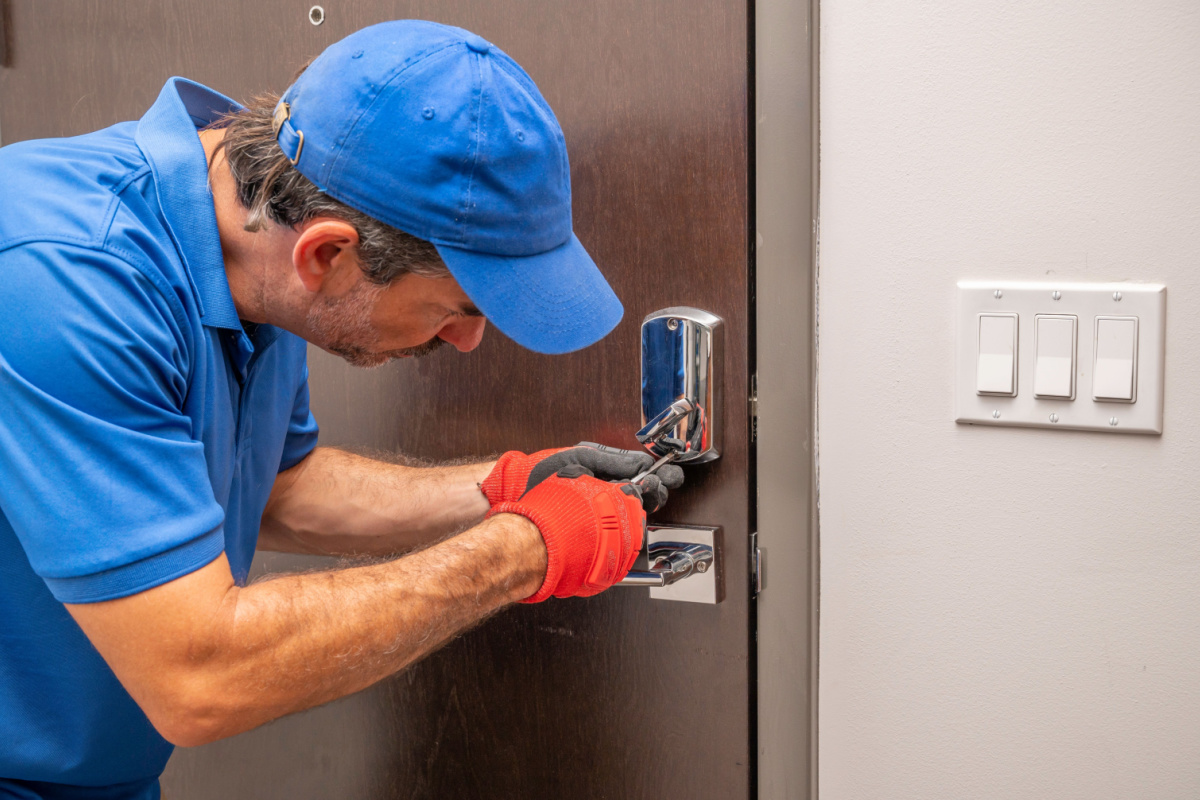
Homes settle gradually, and that subtle movement can throw a previously well-aligned lock out of sync with its strike plate. This often shows up as a door that’s harder to lock or unlock than it used to be. Our technicians realign and adjust the hardware accordingly. This is especially common in older homes with natural foundation shifts. Correct adjustment restores smooth, easy operation.

Even a failed attempt at forced entry can leave a lock’s internals bent, loose, or otherwise compromised. The damage isn’t always obvious from the outside, but it affects how securely the lock actually functions. Our team inspects thoroughly and repairs any hidden issues. This is especially common after any suspicious activity near a door. Full repair restores genuine, dependable security.
Every lock problem eventually comes down to one decision — is this worth fixing, or does it need to go? Here’s a practical way to think through it before calling anyone.
Repair usually makes sense when:
The lock is otherwise in decent shape, the issue is isolated to one specific symptom (stiffness, a slight misalignment, a noisy turn), and there’s no sign of tampering or forced entry. In these cases, a repair typically costs less, takes less time, and fully resolves the problem.
Replacement usually makes more sense when:
The lock has been affected by an attempted break-in, the hardware itself is genuinely outdated or low-security, or the same issue keeps coming back despite previous repairs. Continuing to patch a lock that’s fundamentally at the end of its life often ends up costing more over time than one proper replacement would.
Not every symptom means the same thing, and misreading them can lead to unnecessary cost either way.
A key that’s stiff but has always been slightly stiff isn’t necessarily an emergency — it’s worth monitoring rather than panicking over. A key that’s become suddenly and noticeably harder to turn over the past week or two, on the other hand, usually signals something actively getting worse and worth addressing sooner rather than later. A lock that feels physically loose in the door, wobbling slightly when you touch it, points to a hardware or frame issue rather than just the internal lock mechanism — and that distinction changes what kind of repair is actually needed.
A rushed technician might hear “the key doesn’t turn easily” and jump straight to replacing the whole cylinder. A more careful approach involves actually testing the lock — checking for debris, testing alignment with the strike plate, feeling for resistance points, and only then deciding whether it’s a cleaning job, an alignment fix, a component replacement, or genuinely time for new hardware.
This matters because the same symptom can have several different causes, each with a different fix. Guessing wrong means paying for a repair that doesn’t actually solve the problem.
A surprising number of “lock problems” aren’t actually about the lock at all. Homes settle over years, and that gradual shift can throw a door’s alignment off just enough that a perfectly good lock starts struggling to engage with the strike plate. In these cases, repairing or adjusting the strike plate position solves the issue entirely, without touching the lock itself. It’s worth having this checked before assuming the lock is the problem.
This is one situation where “it still works” can be misleading. A lock that’s been pried at or tampered with might still turn and lock normally on the surface, while having sustained internal damage that weakens its actual resistance to a second attempt. Any lock that’s shown signs of tampering deserves a proper inspection, even if it seems to be functioning fine.
Once a lock is repaired, a small amount of upkeep extends how long that repair actually lasts. Avoiding force on a stiff key, keeping the keyhole clear of debris, and having older locks checked periodically — even without an obvious problem yet — catches small issues while they’re still cheap and easy fixes rather than letting them build into bigger ones.
A lock repair done properly isn’t just about making the symptom go away for now. It’s about understanding why the problem happened in the first place and fixing that root cause, so you’re not calling again in three weeks for the exact same issue.
Same-Day Appointments Available
If the hardware is otherwise sound and the issue is isolated — like stiffness or minor misalignment — repair is usually enough. Damage from tampering often calls for replacement instead.
This is often caused by internal wear, debris buildup, or a door that's shifted slightly out of alignment over time.
Sometimes, but it depends on the extent of hidden internal damage. A proper inspection is needed to confirm whether repair is safe or replacement is necessary.
It's more common than people expect. A settled door frame can throw off alignment with the strike plate, making a perfectly good lock seem faulty.
Most repairs are completed in a single visit, depending on what's actually causing the issue.
